
The intersection between artificial intelligence and intellectual property law has become a critical point of conflict for businesses and their creative workers. Human-centric standards determine legal title rights because AI can produce logos and brand names. The current rules must be understood by people who use machine learning to create brand identities.
Lack of Legal Personhood

The current trademark law requires that a trademark be owned by a person who can be either an individual or a registered company. AI functions as a tool which prevents it from entering into contracts or acquiring ownership of property. The authorities regard it as a tool which lacks the power to hold property.
The Human Authorship Requirement

Trademark offices require that a human or a legal entity be designated as the applicant for all trademark applications. The registration process operates under the assumption that a proprietary grantee will take charge of the trademark. Machines cannot make legal claims, so they are excluded from being listed as owners.
Rights Through Business Use

Trademark rights emerge when a business uses its name or logo to promote its services in actual market transactions. The AI does not conduct business operations or sell products, so it lacks the ability to create these rights. Only the person using the AI output in trade can claim the trademark.
The Role of the Human User
The person who provides the prompt and selects the final design is generally considered the owner. Courts require proof of human participation in the creative process before they will accept any claims of authorship. The act of clicking a button does not establish your status as the original creator.
AI Developer Terms of Service

Your ownership of an AI tool depends on the terms of the contract which you accepted when using the tool. Some platforms grant users full commercial rights, while others may retain partial ownership of the outputs. You must check these terms to ensure you actually own the design you created.
Challenges in Distinctiveness
A logo requires trademark protection when it displays both uniqueness and total customer confusion prevention regarding existing trademarks. The legal system treats AI-generated marks as more vulnerable because they lack clear legal protection.
Public Domain Risks
A logo that gets created from complete AI processes without any human alterations fails to meet the requirements for copyright protection. The artistic design itself can be copied by others even though you use it as a trademark.
Documentation of the Process
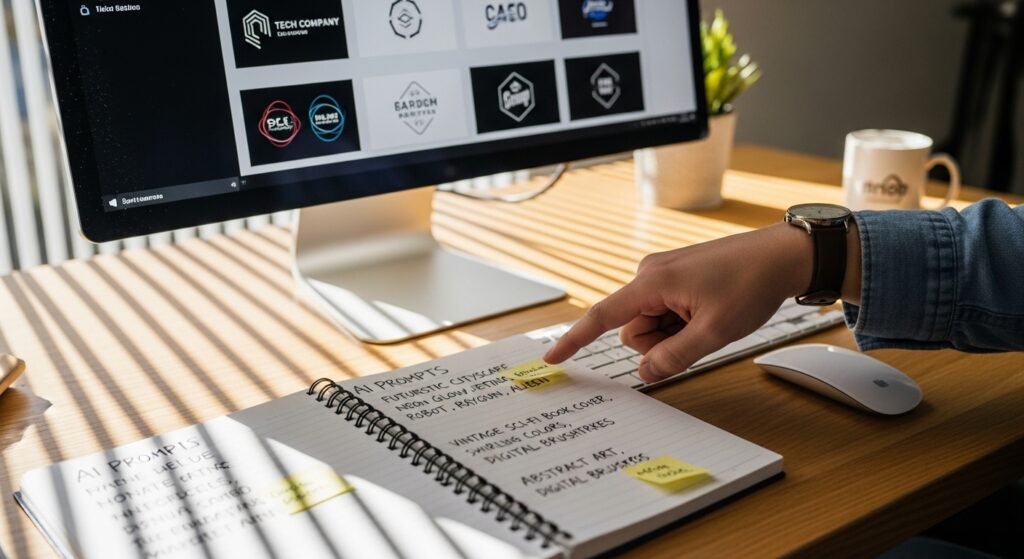
To protect an AI-generated brand, you should keep records of your prompts and any edits you made. The proof shows that humans controlled the creative process. The evidence must be provided to establish your trademark rights in court.
No Automatic Protection

A name or logo generates legal ownership rights when it creates an appealing design. You must actively use it in your business or file an application with the government. The AI system waits for you to make decisions before it will protect the mark.
Liability for Infringement

The human user becomes responsible for trademark violations when an AI produces a logo which violates someone else’s trademark rights. The AI system cannot face lawsuits for damages and it cannot be deemed responsible for copyright infringement. Users must perform their own searches to ensure their new brand is legally safe.
