
As much as passion is required, starting a manufacturing business is more than machines and raw materials. Systems, precision, planning, and long-term thinking, a lot goes in. Manufacturing consumer goods, industrial parts, or anything else , choosing right product saves time and money.
Right Product and Market Gap

Every successful manufacturing business begins with a clear product idea. While trends change over time needs remain pretty same, focus on right product. Researching on market demand, competition, pricing gaps, and customer pain points gives a solid starting advantage.
Market Research

Know your pros and cons, know your products and competitors. Ask yourself who will be your buyer, what price you are offering and to what extent? How often? Market research often reduces risk and helps you avoid future costly mistakes.
Clear Business Plan

Include details of the product Investment prerequisites, price of the equipment sources of raw materials, capacity for production strategy for pricing, analysis of breakeven. A solid plan makes it easier to get bank loans or draw in investors.
Capital Requirements

Compared to trading businesses, manufacturing requires more capital. Make plans for equipment and machinery, renting a factory or buying land Ingredients, Costs of labour, Utility bills for water and electricity, registrations and licenses Fund for emergency. Never begin without at least six months of financial cushioning or a backup plan.
Register Your Business Legally

Partnership, Pvt. Ltd., LLP, or proprietorship ,decide on your registration. Once done , proceed with registration of the business GST, enrolment registration as an MSME (if applicable), license for the factory clearance for pollution control (if needed). Credibility and risk management increases when you follow rules.
Select the Right Location

Transportation costs, labour availability, and logistics are all impacted by location. Selecting an area with good connectivity with reasonable rental prices. Respect the zoning laws. For manufacturing setups, industrial areas are frequently the best option.
Quality Machinery and Technology
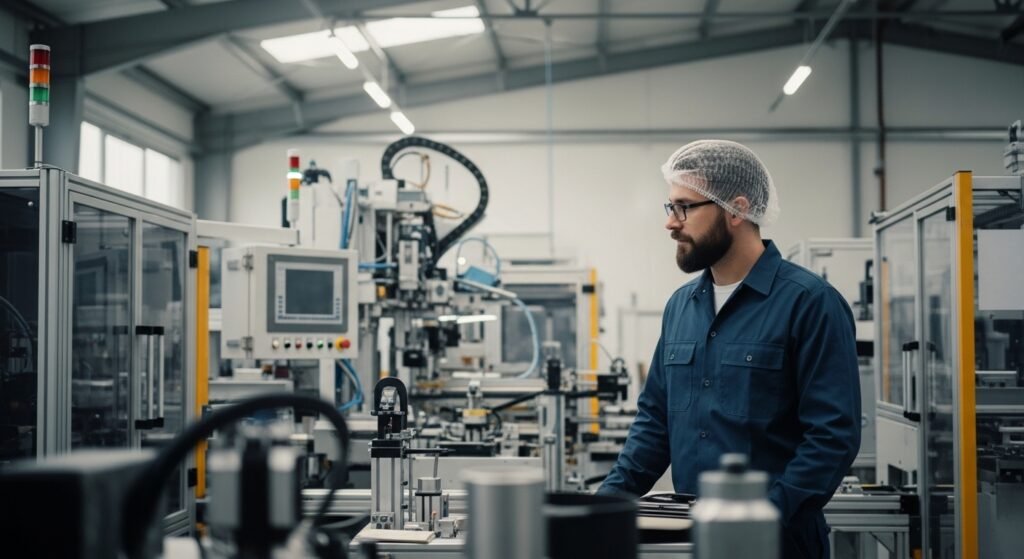
The machinery determines the efficiency of your production. Don’t sacrifice quality in order to save money. Take the automation level into account. Costings for maintenance ,efficiency of energy scalability and modern equipment lowers long-term expenses considerably increasing productivity.
Build a Skilled Workforce

Manufacturing is a collaborative activity. Hire capable and high-quality management operators as technicians and supervisors. Make sure they receive the proper instruction. Safety, and efficiency just like people are crucial as machines for consistent performance.
Quality Control and Standardization

A brand’s reputation is developed through consistency. Put quality testing protocols into action. SOPs, or standard operating procedures, safety procedures and systems for managing inventories. A minor manufacturing flaw can permanently erode consumer confidence.
Sales and Distribution Channels

Without sales, production is just dead inventory. Make plans on how you are planning to do sales. know export prospects, distributor networks, online marketplaces, and direct B2B supply. Building relationships, branding, and marketing are just as crucial as production.
