
The phenomenon of viral social media moments extends beyond transient fads and humorous clips because these digital phenomena show the current state of our shared societal beliefs and prejudices and our changing understanding of who we are. The internet breaks when particular moments come to light because these events uncover hidden cultural truths and create distance from our acceptable world knowledge.
The Power of the “Relatability” Currency

Viral moments achieve success through their presentation of fundamental human experiences that exist across all people. The two moments demonstrate how society increasingly prefers authentic expressions of self than flawless presentations. The clips function as our means to demonstrate our belonging to a particular social group.
Digital Tribalism and Group Identity

People tend to select their preferred side when they observe a viral moment. The way we construct our identity shows how much we depend on our social relationships with other people. The moments serve as political testing points that permit people to demonstrate their beliefs about the world while practicing political identification through their group memberships.
The Speed of Cultural Judgment

Viral moments show how society needs only ten seconds to establish an assessment of an individual. The public shaming dedicated to social norm enforcement has evolved into an accepted practice of contemporary society. The public displays a tendency to disregard the detailed aspects that make up distinct identities.
The “Main Character” Syndrome

The majority of viral trends motivate people to behave like they are the lead character in their personal narrative. The world displays mounting interest in how people express their individual qualities through the daily activities they perform. The social environment progresses toward a condition where people believe that their existence will only receive acknowledgment when others observe them.
The Erosion of Local Nuance

The global audience needs to see a small town event from its original setting when it becomes a worldwide viral phenomenon. The internet transforms various cultural elements into a single universal viewpoint because people who access online content lack knowledge about different identities and traditions.
The Fleeting Nature of Empathy

The public experiences strong sympathy for a viral story but then forgets about it the following day. Social media platforms have shortened our shared attention span which affects our emotional reaction processing because people now treat real human tragedies as temporary entertaining content.
Validation Through Metrics

The modern identity of people depends on external validation because they can determine whether a moment has succeeded through its received likes and shares. People now assess their self-worth based on their digital statistics because society has established methods for measuring their influence.
The Commercialization of Identity

Advertising professionals begin to create campaigns right after an event achieves viral status. The public transforms personal identity elements and authentic human experiences into saleable content for marketers who now use these elements as components of their advertising strategies.
Challenging Social Hierarchies
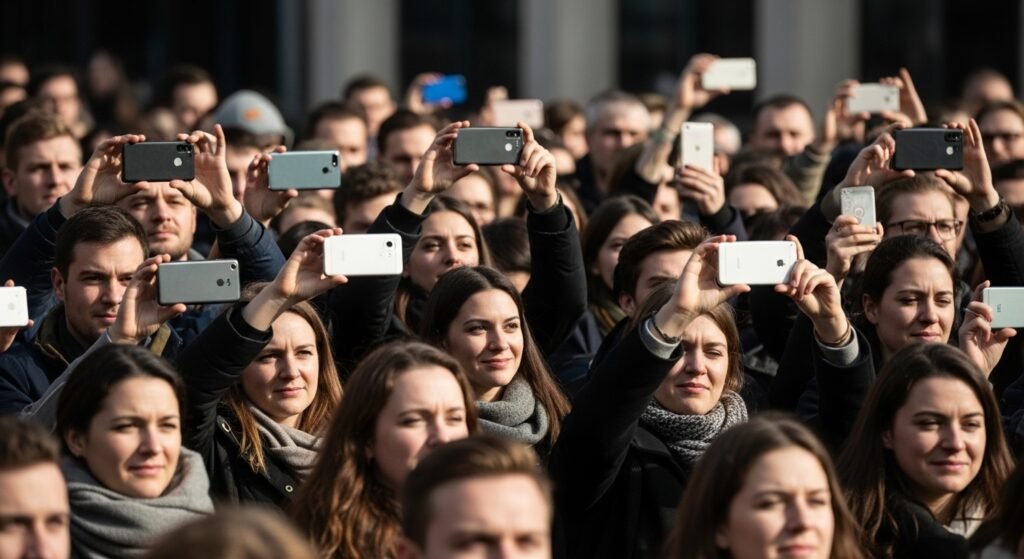
Viral videos reveal concealed injustices which include hidden power dynamics between people. The moments show how digital tools empower citizens to demand social system accountability while enabling them to challenge established authorities and traditional social structures.
The Search for Community

The existence of a viral meme or challenge allows isolated individuals to experience connection with a larger group. Society demonstrates an urgent need for social connections because physical community areas are disappearing while digital platforms become the new normal.
The Fragmentation of Truth

The ability to edit and remove viral moments from their original context demonstrates the societal condition of our shared truth. Society lacks the ability to differentiate between actual circumstances and their transformed viral representations which poses serious challenges for our opinion development process.
