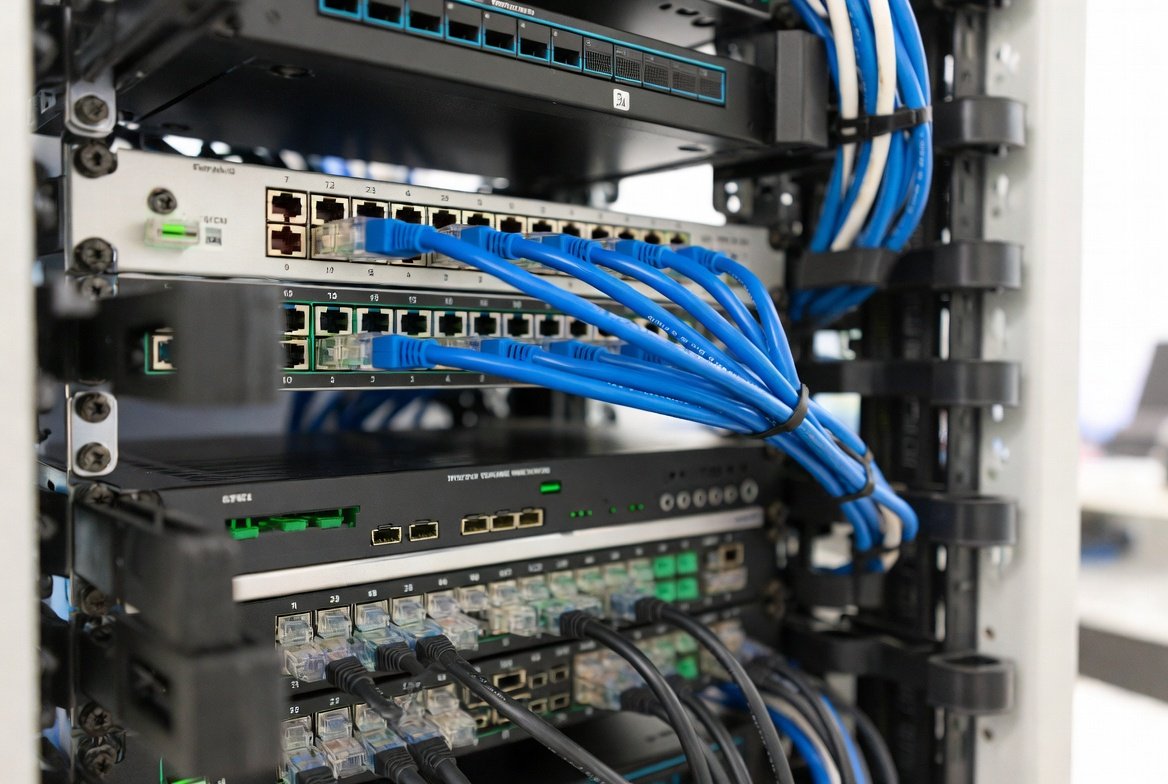
Ethernet cables connect computers, routers and other equipment and are the foundation of the modern networks. Although they are all similar, you can notice that some of them are blue, some are green, yellow, or grey. An Ethernet cable has a colour, and it is not by chance that it does so; in fact, the colour of an Ethernet cable can be frequently useful in finding connections. Coloured cables are used by businesses, data centres and even home networks so as to simplify the process of organisation and troubleshooting. It is necessary to understand why certain cables are blue, so that you can keep your network more effective, eliminate unintentional disconnections, and provide a flow of information easily. This is a closer examination of the causes of blue Ethernet cables.
Standard Identification

Network cables that are in use are usually blue Ethernet cables. Network managers can easily differentiate between regular and specialised data connections by ensuring that regular connections are always blue.
Organizational Purposes
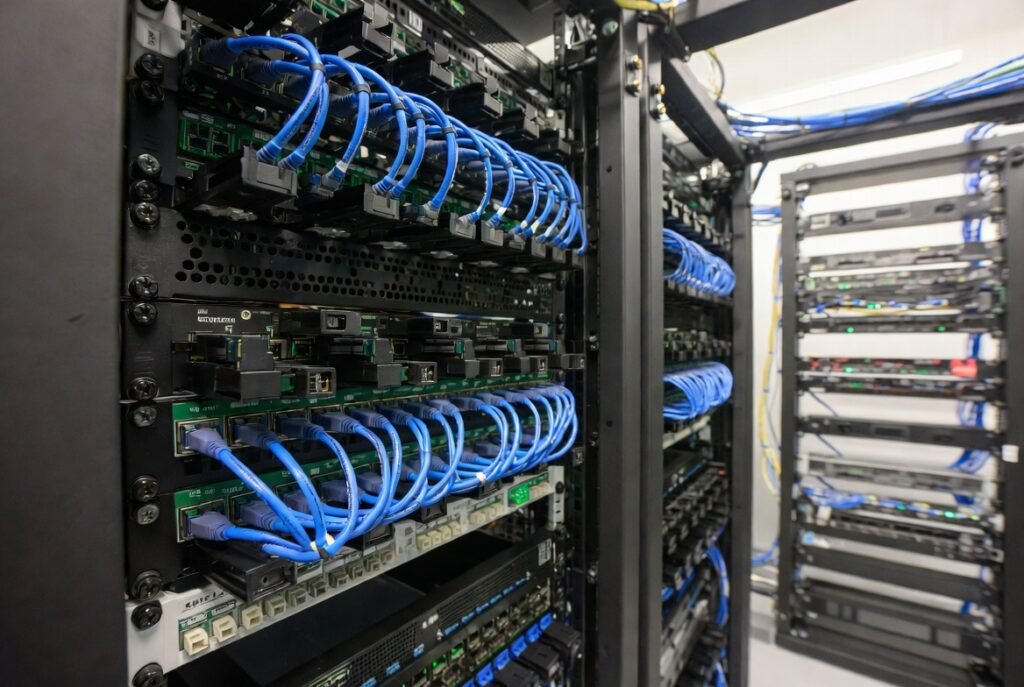
Large networks are organised using colour coding. The blue cables can mean a certain kind of connection and, thus, can be easier to recognise which devices are connected and find it easier to renovate and upgrade.
Differentiating Networks

Different networks are represented by different colours in offices or data centres. The internal office networks may be connected by blue cables, and the rest of the colours may be associated with guest Wi-Fi, security networks, or VoIP lines.
Ease of Troubleshooting

Even the colour schemes are alike, all of which help troubleshoot network problems more quickly. A blue cable is an indicator of a standard connection and enables technicians to easily trace and repair issues without confusion.
Visual Management
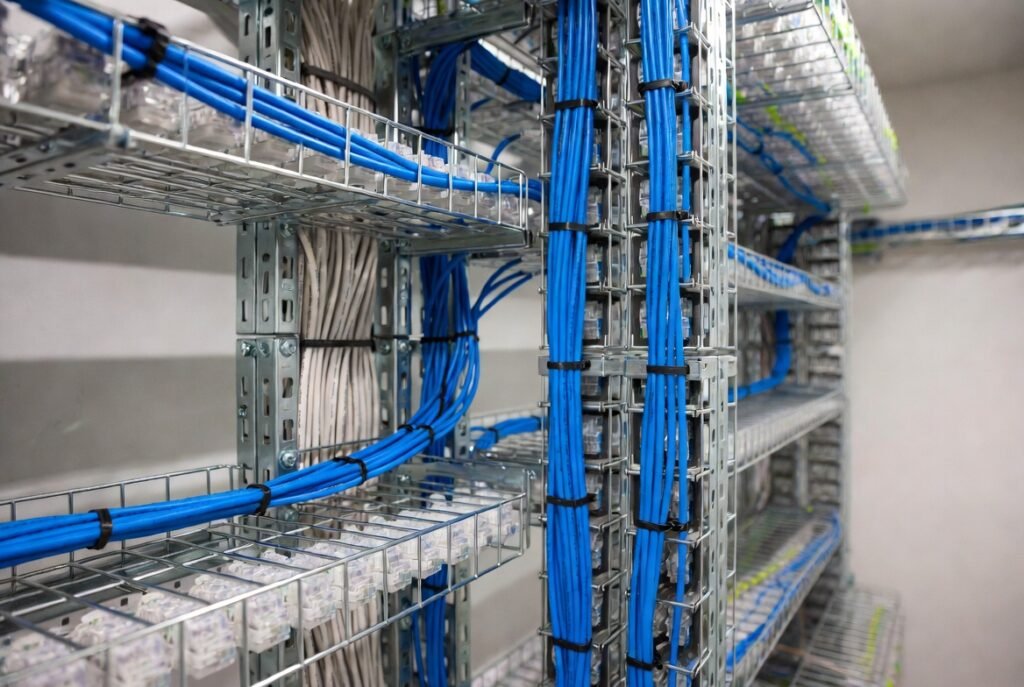
Cables become very tangled and messy. Blue cables have a contrasting colour with the rest of the cables and minimise mistakes during unplugging or repositioning cables and setups.
Compliance with Industry Practices

Some companies use industry conventions of colour coding. Patch cables in structured cabling systems are frequently done in blue, which gives uniformity to all installations and also makes it easier to fit, as new technicians can adapt.
Differentiating Cable Types

Blue cables tend to be Cat5e or Cat6 Ethernet cables. The colour reveals the purpose and not the speed, so that one knows the role of the cable in the network without necessarily testing it literally.
Aesthetic Choices

On top of functionality, blue cables look good in offices. They are compatible with other devices and do not create a cluttered appearance since they blend with other cables of the same colour.
Historical Convention

The blue has a historical background. The ancient networking systems tended to have blue as a general connection colour, and this has left a legacy, which is still being observed in contemporary networks.
Simplifying Installation

Colour-coded cables, such as blue ones, help minimise errors to be minimised during installation. Installers are able to see where each cable is supposed to be very fast, wasting less time and making sure all connections are made.
Training and Documentation

Training/Instructional setups with blue Ethernet cables will enable learners to learn the network layouts at a fast rate. Cable colours are frequently mentioned in documentation, and blue cables are also a useful resource for teaching and teaching aids.
